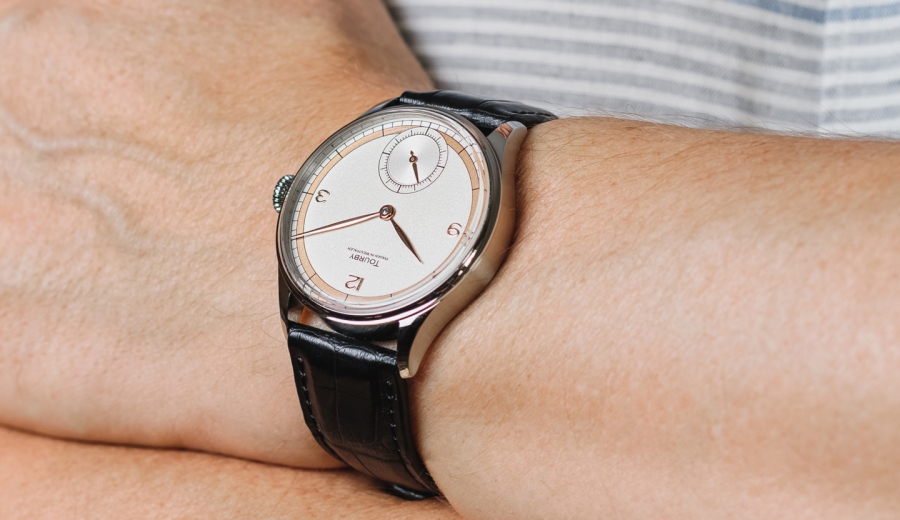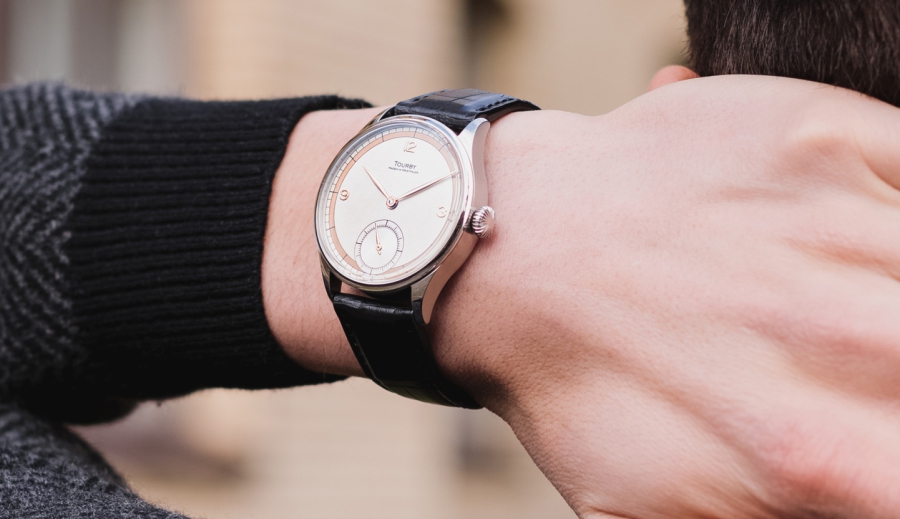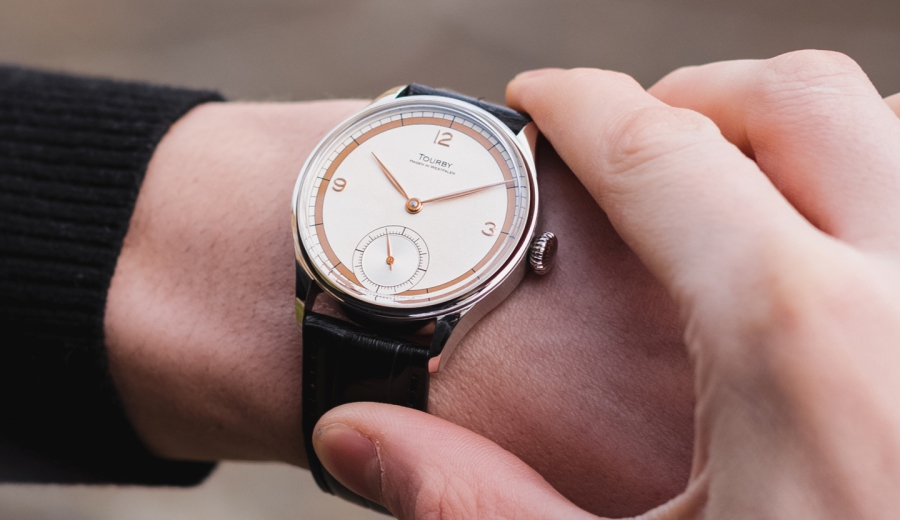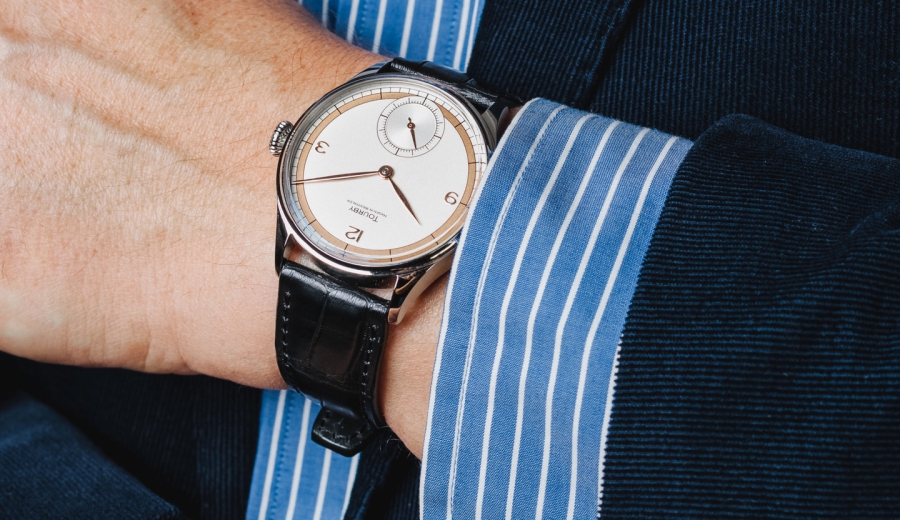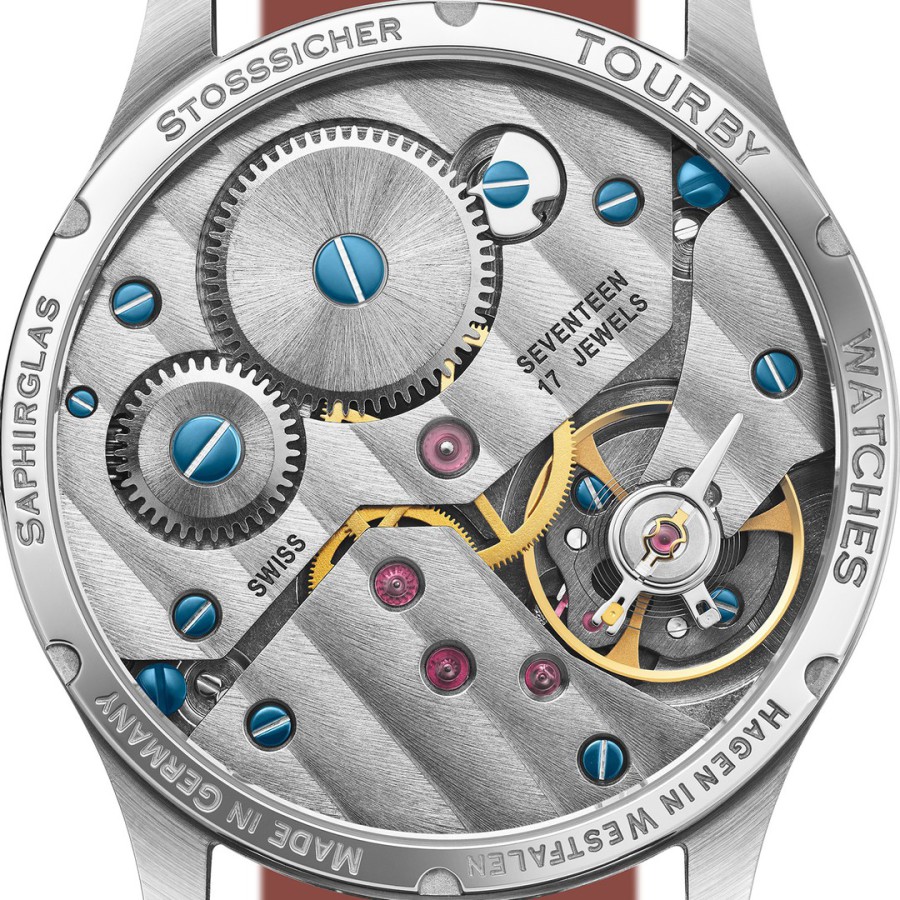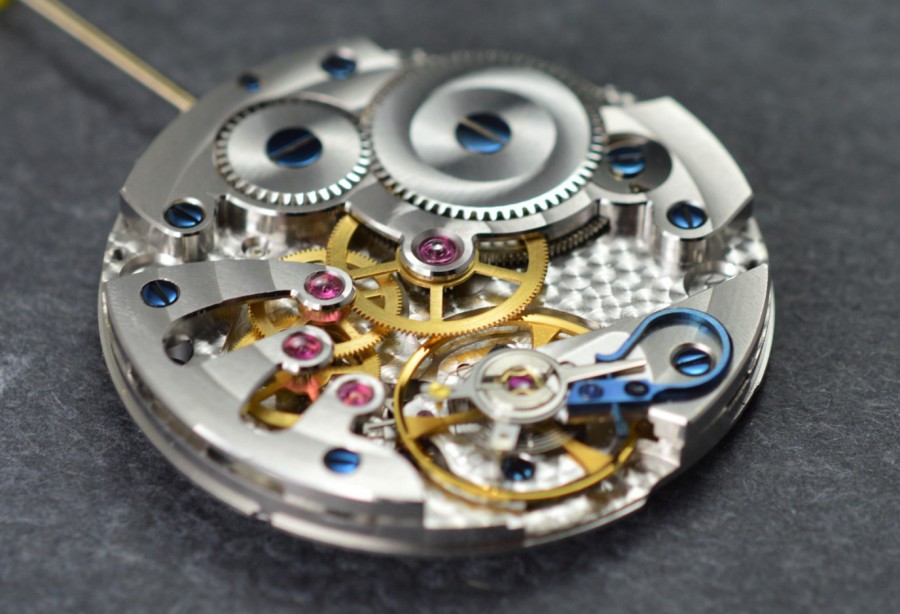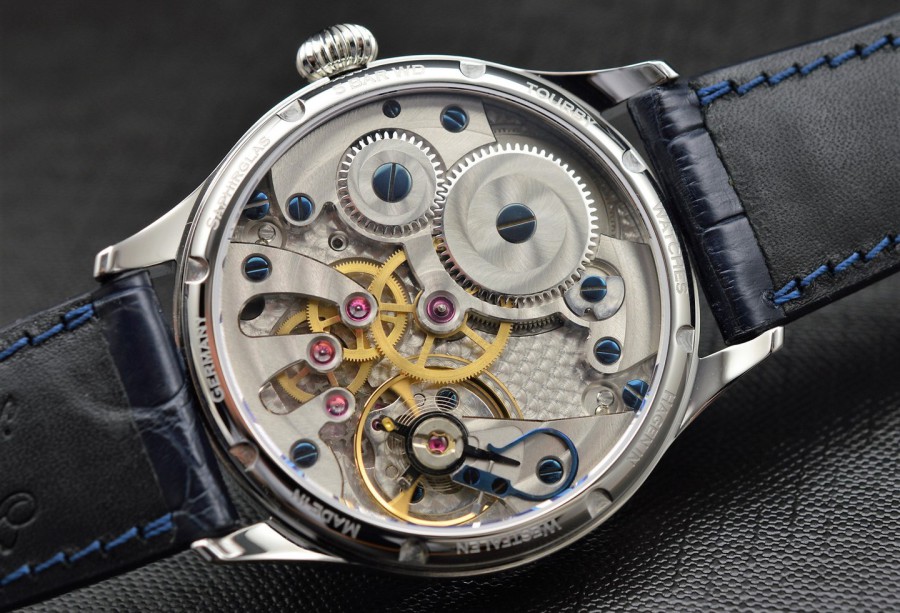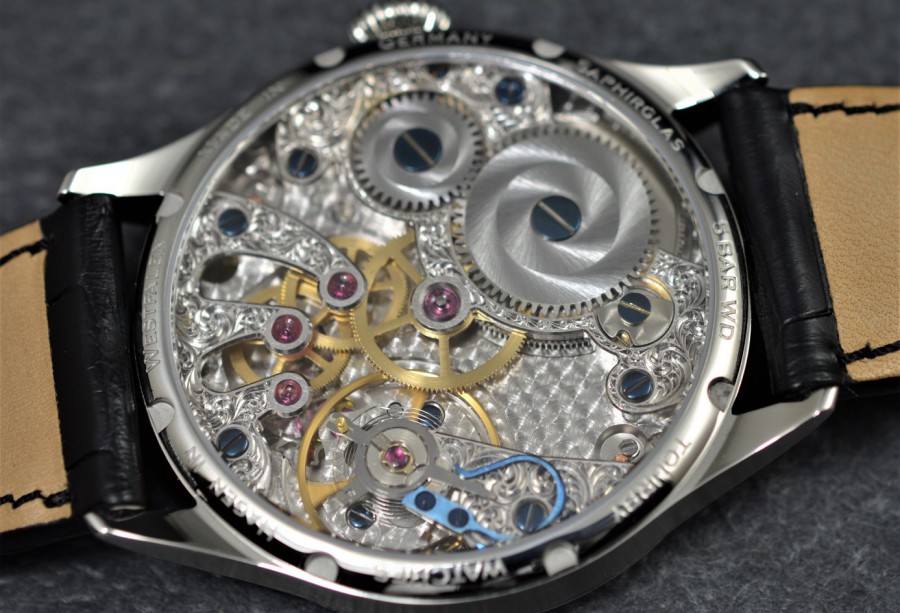
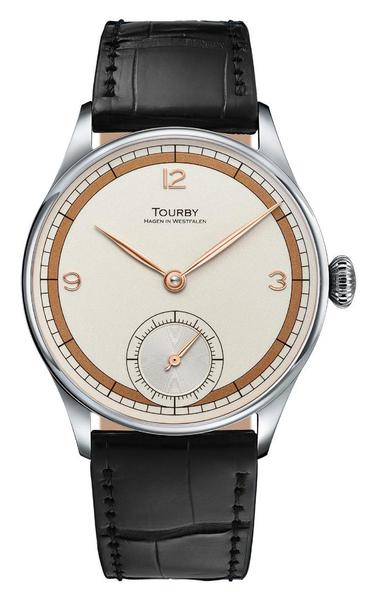
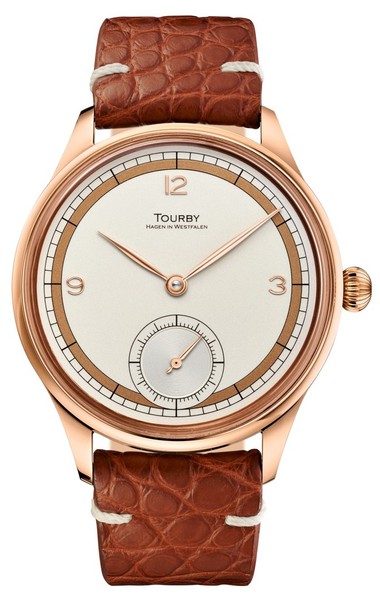
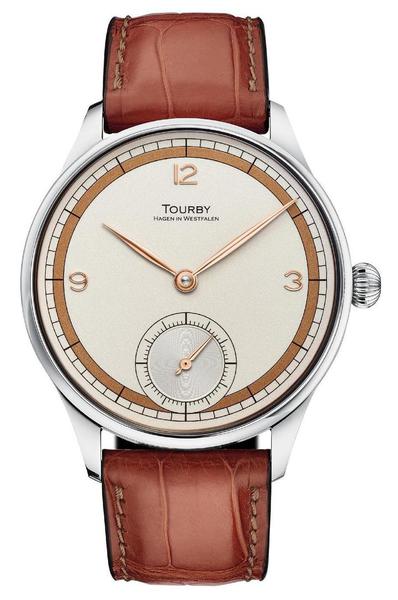
Ref. 2031
Available in 40 mm or 43 mm
Small series of 50 timepieces only
Total Price 2,150.00 Euro
(NET excluded VAT)
Delivery time 4 weeks
Shipping free worldwide via DHL or FEDEX
"Sector Dial" models date from the early phase of Art Deco. From 1910 this design dominated almost the entire pocket watch market and was used by all well-known watch
manufacturers. From 1935, with the advent of the wristwatch, this design was continued due to its popularity and is one of the most popular early wristwatch designs. In general, watches during this
period looked very similar. At that time, the dials were not designed by the watch manufacturers themselves, but the design was specified by the dial manufacturers. The watch manufacturers chose a
design from the dial manufacturer's range, and they then only had to print the customer's logo on the dial. A dial was often used by several brands at the same time. That's why when looking for old
watches you often find different brands with one and the same design. Between the two world wars, the Art Deco design prevailed among classic watches. These watches can be recognized by the following
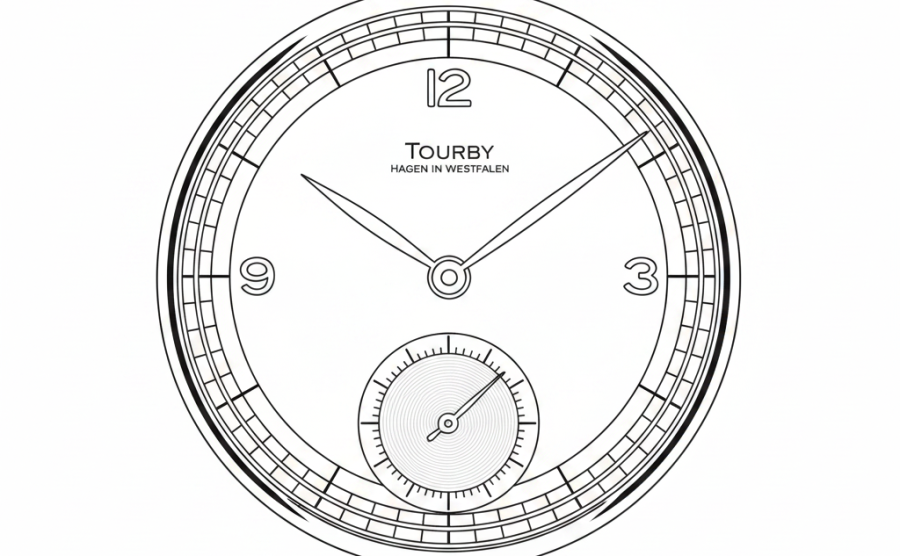
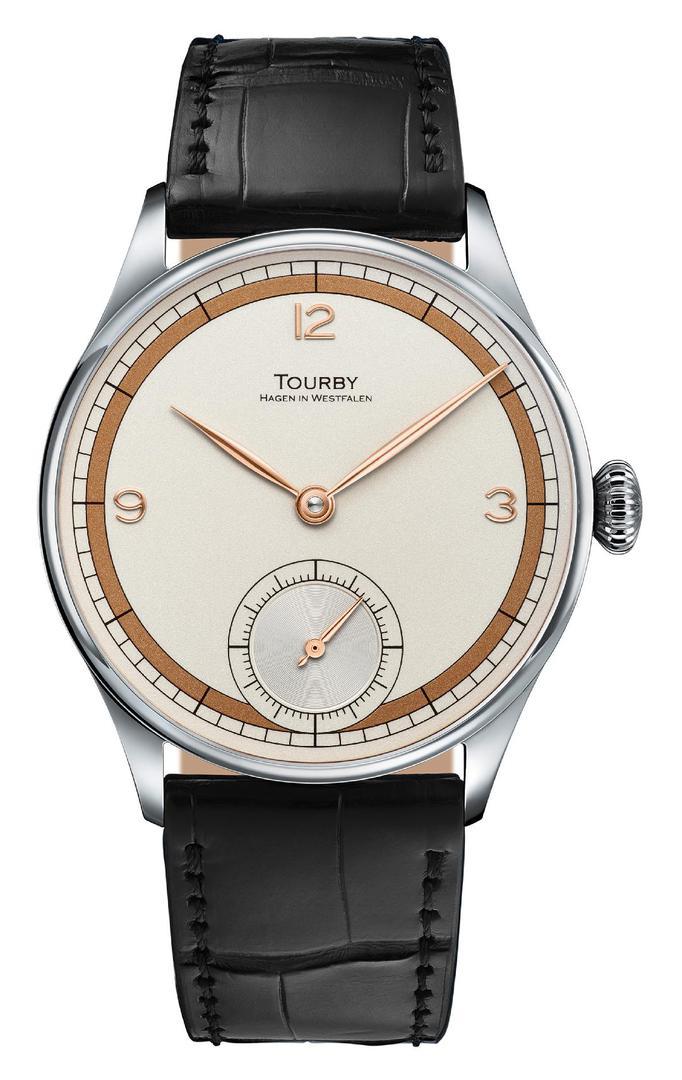
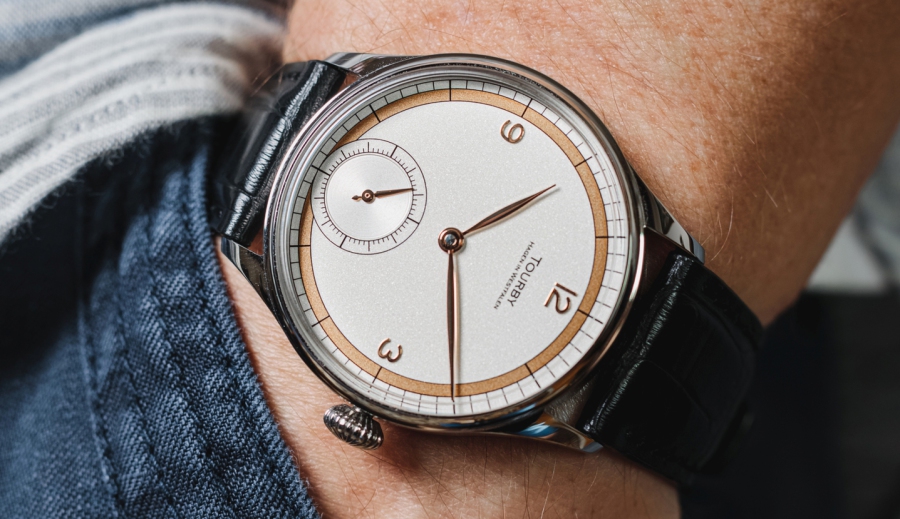
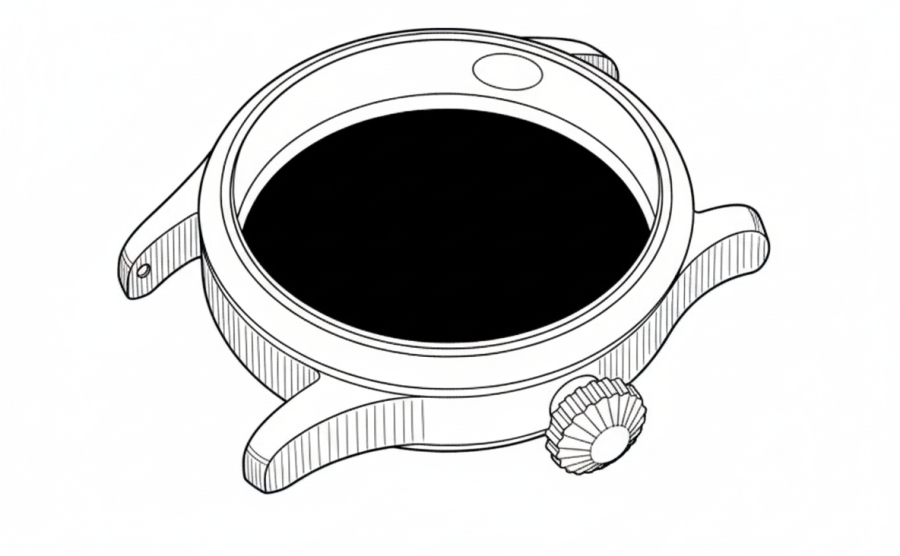
features: railway line on the outer edge, Arabic numerals, small seconds at 6 o'clock, classic slim "feuille" hands and a simple and flat case with a non-slip crown. Art Deco watches came in two
popular varieties, the classic "Art Deco" and the "Sector Dial" models. The classic Art Deco pocket watches had Arabic numerals throughout. The "Sector Dial" models mostly had only three numbers (3,
9, 12), only dashes or a combination of numbers and dashes. The small second was also different. While the classic "Art Deco" models also used a railway line in the second field with the division
into tens (10,20,30,40,50,60), the "Secotor Dial" models only had dashes in the second field, which were also divided into two areas - so-called sectors - were divided into an inner and an outer
circle.
The historic "Sector Dial" model incorporates concentric dashes inside and outside the hour or minute markers with solid lines connecting these circles. An hour sector
divides the space between these lines into twelve sections, while a minute sector has sixty sections, often with heavier hour markings. The division in the seconds field also consists of two
sections. The inner ring is blank while the outer ring has short and longer dashes. No numbers were used in the seconds field. Since the minutes are divided into sixty small sectors, they look like
the classic "chemin de fer" railway lines, which are also known from many other pocket watches. Strictly speaking, the outer ring of the "Sector Dial" models is not supposed to represent a railway
line at all. Rather, it is about the division into sectors. In order to make this clearer, the sectors in the minute scale were drawn as squares in later models in order to distinguish them visually
from the classic, rectangular railway lines.
(The watch in the video is a prototype with a
different movement)